
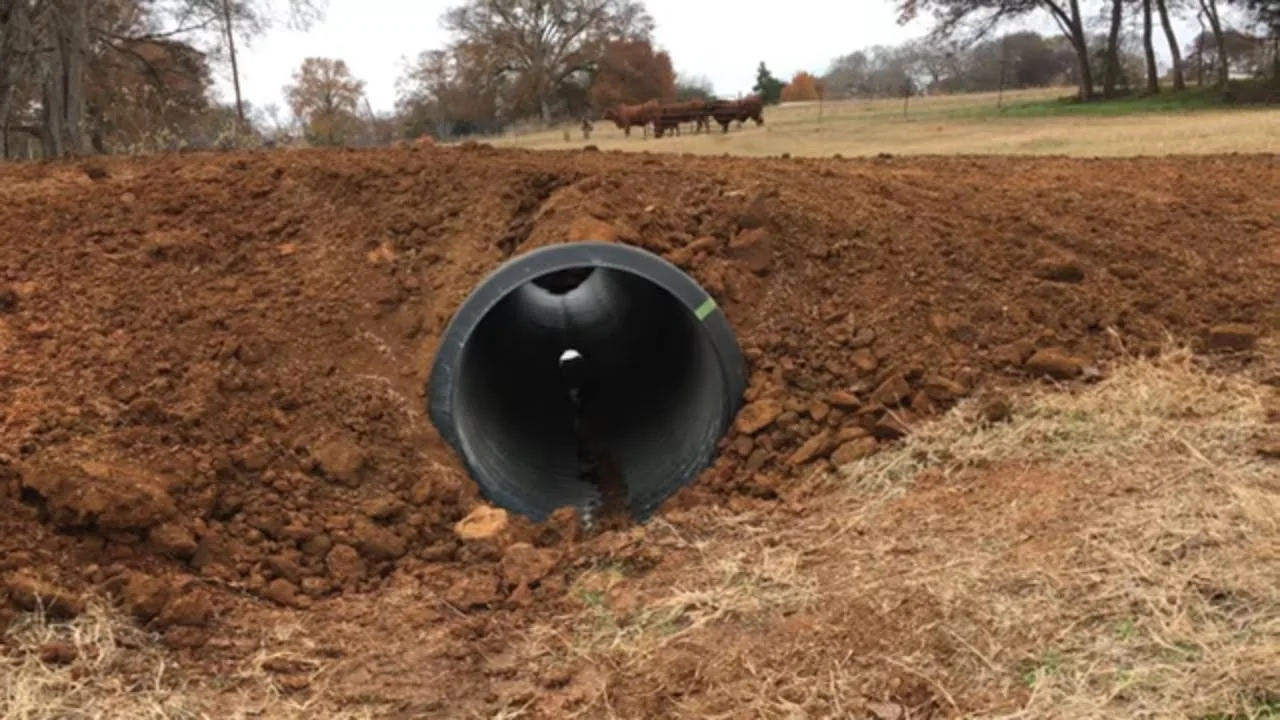
How much does a driveway culvert cost in South Carolina?
Angi’s cost guide puts professional driveway culvert installation at $1,000 to $9,000, with an average of about $4,500. The length and type of pipe move that number, and so does the driveway surface. Angi notes the price usually includes resurfacing the part of the drive that sat over the pipe.
In South Carolina, the road in front of the lot changes who pays. SCDOT builds one residential entrance off a state highway at its own expense, with pipe where drainage needs it. On a county road, the county sets the rules for the pipe. Dirt Cheap handles putting in or replacing a driveway culvert with full size excavators, and the estimate is free.
What do published guides say a driveway culvert costs?
Angi puts professional driveway culvert installation at $1,000 to $9,000, about $4,500 on average. The pipe alone, in a 24 inch by 20 foot length, runs about $800 in aluminum or galvanized steel. Plastic runs $700. Excavating contractors charge $120 to $150 an hour for culvert work in Angi’s numbers.
| Item | Angi’s published price |
|---|---|
| Professional driveway culvert installation | $1,000 to $9,000 |
| Average installed cost | About $4,500 |
| Aluminum or galvanized steel pipe, 24 inch by 20 foot length (pipe only) | About $800 |
| Plastic pipe, 24 inch by 20 foot length (pipe only) | $700 |
| Vibrating compactor | $83 a day to rent, $500 to $1,500 to buy |
| Excavating contractor for culvert work | $120 to $150 an hour |
Divided over the 20 foot length, Angi’s metal pipe runs about $40 a foot. Plastic works out to $35 a foot. Both prices are for 24 inch pipe. The road’s owner may call for a different size or material.
Angi notes the installed price may or may not cover lining the ditch. It usually covers resurfacing the patch of drive that sat on top of the pipe. Ask what each quote includes before you compare two numbers.
Angi’s tool list for the job includes a vibrating compactor. The fill around a culvert goes back in layers, packed as it goes. That keeps the drive level over the pipe. A new culvert lasts 25 to 50 years in Angi’s guide.
Who pays for a driveway culvert on a state highway?
On a state highway, SCDOT builds one residential entrance inside its right of way at its own expense. Where drainage needs a pipe, state law has SCDOT install 12 to 30 inch pipe. The home must already exist or be built for the owner’s own use, not a speculative or resale lot.
The rules come from SC Code 57-5-1140 and SCDOT Engineering Directive 16, known as ED-16. The free entrance covers only the part inside the state right of way. For two-way traffic, the paved part of the entrance tops out at 16 feet. A wider entrance or a second one may be built at the owner’s expense.
Pipe size has two limits. State law lists 12 inch pipe, but ED-16 calls for 15 inches or larger on every driveway that needs pipe. If the ditch needs more than 30 inches, SCDOT may install it and charge the homeowner the difference in cost. The pipe has to be long enough to reach the toe of the slope on each side.
Anyone other than SCDOT needs an encroachment permit before working in the right of way. SCDOT charges no fee for it. Under SCDOT’s access rules, your own contractor can build the residential drive at your expense. SCDOT then does a final inspection when the work is done.
State law makes it unlawful to lay pipe under a state highway without a permit. The penalty is a fine of up to $100 or up to 30 days. ED-16 also calls for an all-weather surface, and concrete in that section should be at least 6 inches thick. Our guide to what a poured concrete driveway costs has published prices for that slab.
Who sets the pipe rules on a county road?
On a county road, the county does. In Lexington County, work in the County road right of way needs an encroachment permit from Public Works. The work must start within 90 days of approval, and the permit runs 6 months. Public Works must get notice before backfilling starts.
Lexington County Public Works maintains about 1,300 miles of County roads and the drainage along them. Its plan checklist says driveway culverts are designed to the 25-year storm. The same checklist calls for reinforced concrete pipe for storm drainage inside County right of way. Those lines are written for development plans, so ask Public Works what it wants before buying pipe for one house.
Outside town limits, SC Code 57-7-60 covers any digging in or across a county road. It calls for written permission from the county first. Before granting it, the county takes a bond or a cash deposit to put the road back.
Counties handle the pipe itself in different ways. Aiken County, for one, provides one residential driveway per parcel on County-maintained roads. It supplies 24 feet of pipe on paved roads and 20 feet on dirt roads. The owner buys any extra pipe, and the County does not pave aprons or build commercial drives.
The road’s owner sets the pipe, so call that office before you buy one. Inside town limits, start with the town. Angi notes some cities maintain driveway culverts in their own right of way.
What moves the number on a Midlands driveway culvert?
Angi ties driveway culvert prices to the pipe’s length and type and to the driveway surface. On a Midlands job, the depth of the ditch matters too, and so does taking out an old pipe. The ground runs from loose sandy soil that washes to heavy red clay that holds water.
Pipe diameter and length. The road’s owner sets the size, and the ditch sets the length. A deep ditch means taller fill over the pipe and longer slopes on each side, so it takes more pipe. Past 30 inches on a state highway, SCDOT may charge the homeowner the difference in cost.
Pipe material. Angi lists aluminum, galvanized steel, plastic and concrete as the usual culvert pipe materials. Galvanized steel suits high traffic but is prone to rusting, which can create weak spots. Aluminum and plastic will not rust, though neither is as strong as steel. Concrete pipe is durable and heavy, and Lexington County’s checklist for development plans calls for reinforced concrete pipe in County right of way.
The drive over the pipe. Angi’s installed price usually includes resurfacing the drive over the pipe. A concrete apron over the old pipe comes up first. Our page on taking out an old concrete apron covers that step. The old pipe and the concrete rubble leave on our own trucks.
Taking the old pipe out. Angi says a rusted out or damaged culvert is generally not worth repairing. Replacing it takes less time and will likely last longer than a repair. A full size excavator needs room at the road to lift the old pipe out whole.
The ground. Loose sandy soil washes easily, so the fill around the pipe has to be packed tight. Red clay holds water, so a wet spell can push the work back. When the water has to keep going past the drive in a buried pipe, that takes trenching for a longer pipe run.
A culvert fixes the crossing, while the rest of the drive may need its own work. When the drive stays rutted or soft, see fixing ruts and soft spots in the drive.
What are the digging rules before a culvert goes in?
South Carolina law puts the SC811 locate request on whoever digs. Notice goes in 3 to 12 full working days before digging starts, not counting the day it is given. The tolerance zone runs half the marked line’s diameter plus 24 inches on either side. Road shoulders often carry buried lines, right where a driveway culvert goes.
SC811 takes locate requests by phone at 811 or online. On a state highway or a county road, the encroachment permit comes before any work. The locate request still applies.
How do you get a driveway culvert estimate around Columbia?
Start by finding out who owns the road in front of the lot. That office sets the pipe size and the permit. Then a contractor can look at the ditch and the drive on site and price the actual work for you.
Dirt Cheap is a family and woman owned demolition and site-work contractor. Our shop sits on Edmund Highway in West Columbia, and we work about 50 miles around it. That takes in Columbia, Lexington, Cayce, Aiken and Orangeburg.
Each new culvert goes in on a firm, compacted bed, with the fill packed in layers. Then the drive goes back over it. A review from Jared Smith reads: “Storm drain repair for apartment complex fixed twice, both required a large excavation.” Estimates are free, so call (803) 796-4727 and tell us about the ditch and the drive at your road.