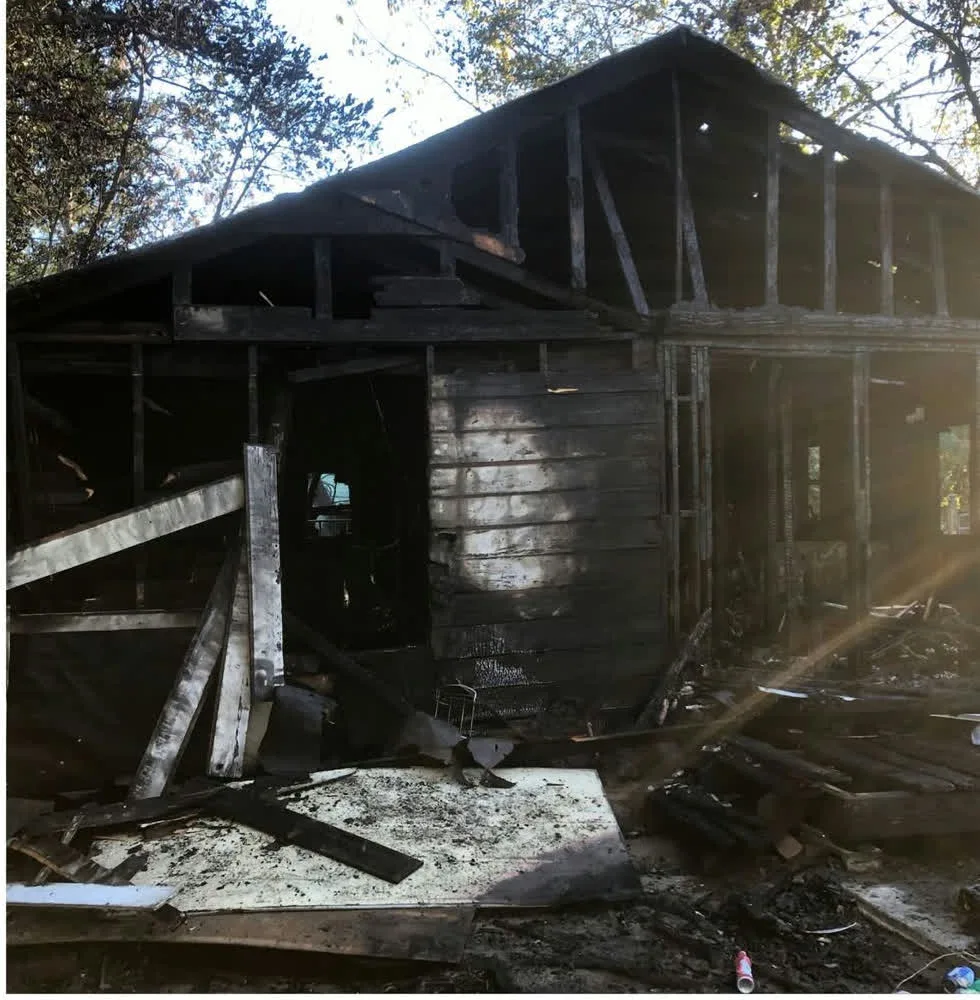
What happens to a fire damaged house in South Carolina?
After a house fire, the structure gets repaired or torn down, the insurance company pays some part of the cleanup, and the lot either gets rebuilt or sold. When the house cannot be saved, the teardown is a normal demolition job with three differences: the debris is heavier, the insurance paperwork comes first, and a burnt house left standing becomes a code enforcement case fast.
Dirt Cheap takes down fire damaged houses for homeowners and for the towns and counties that order them removed. This page covers what we see on those jobs. For the demolition itself, the demolition of a fire damaged house runs through our residential service.
Can a fire damaged house be repaired or does it come down?
It depends on how far the fire got. A kitchen fire contained to one room, with the roof and framing intact, is a repair. Once fire reaches the roof structure, the load bearing walls or the foundation, the math turns toward a teardown.
Insurers classify a fire loss as total in two ways. An actual total loss means the house is destroyed. A constructive total loss means the house still partly stands, but repair costs climb past a threshold, commonly 50 to 80 percent of the dwelling coverage, that makes rebuilding from scratch the cheaper path. That threshold varies by insurer, but when the repair estimate approaches the dwelling limit, most adjusters move to a total loss settlement.
Two things drive a partial burn toward a full teardown. First, water. What the fire did not char, the fire department soaked, and wet framing and drywall grow mold within days. Second, the foundation. After a hot fire, concrete changes color. Pink, red or whitish gray discoloration signals a loss of strength, and a structural engineer has to test the slab before any building department approves reusing it. When the foundation fails that review, the house comes down to bare dirt and the lot starts over.
Does insurance pay for the demolition and debris?
Partly, and the details sit in your declarations page. The common homeowners form, the HO-3, covers the reasonable expense of removing debris of covered property after a covered loss. But that expense is included in the dwelling limit, so it competes with the rebuild money. When the damage plus the debris removal exceeds the dwelling limit, the standard form makes an additional 5 percent of that limit available for debris removal.
On a $300,000 dwelling policy, that additional amount is $15,000. On $400,000, it is $20,000. A full teardown, foundation removal and haul off of a burnt house can cost more than that, so the gap is worth knowing before you sign anything.
Many policies also carry ordinance or law coverage, often around 10 percent of the dwelling limit. It pays for demolishing undamaged portions of the house that current code will not let you keep, and for the added cost of rebuilding to code. That coverage is the one that matters when the city requires the whole structure down rather than a partial repair.
| Coverage | What it does after a fire | Typical figure in a standard policy |
|---|---|---|
| Dwelling, Coverage A | Pays to rebuild the structure, capped at the limit | The number on your declarations page |
| Debris removal | Pays to clear the site, counted inside the dwelling limit | Extra 5 percent of the limit if the limit is used up |
| Ordinance or law | Pays code required demolition and code upgrades | Often about 10 percent of the dwelling limit |
Get the adjuster to the property before demolition. Photograph everything. Ask the adjuster in writing how debris removal and demolition will be paid on your policy. Then the contractor can price the job against what the policy covers.
What happens if a burnt house just sits there?
It becomes the city’s problem, and then yours. Columbia’s nuisance ordinance lists structures that violate the property maintenance code, and any structure that remains unoccupied and boarded up for 90 days with a destroyed, decayed or dilapidated exterior, as a public nuisance. The city serves written notice on the owner of record, can abate the condition itself when the owner does not, and can assess the cost, including attorney’s fees, as a lien on the property. The owner can appeal the finding, which stays the abatement until a hearing.
West Columbia’s code compliance office handles the same situation through its property maintenance and nuisance ordinances. The city notes that a code compliance inspector typically issues a municipal summons, that fines and fees can exceed $1,000 per day the violation exists, and that the city may deny or withhold permits on the property.
For buildings other than single family houses and duplexes, state law adds the State Fire Marshal. Section 23-9-150 defines unsafe buildings, requires the owner to repair or demolish within a set time, and lets the marshal post and secure a building when the owner does nothing.
This is how a burnt house ends up on a municipal demolition list. Towns and counties around the Midlands order dilapidated and fire damaged structures removed, and that work is a regular part of our commercial and municipal demolition. The owner usually pays less by ordering the teardown before the city does.
How is a burnt house teardown different from a normal demolition?
The machine work is the same. An excavator takes the structure down into its footprint, the debris gets loaded, the foundation comes out, and the lot gets filled and graded. Four things change.
The debris is heavier. Charred lumber holds water from the fire hose, and drywall, insulation and roofing come out as a wet mixed mass. Nothing gets salvaged or separated for the clean concrete rate, so it all goes as mixed construction and demolition debris. At the Lexington County landfill that is $38 per ton, against $20 per ton for clean concrete, and a mixed load that is not properly separated is $56 per ton.
The structure is unstable. Burnt trusses and partially collapsed walls come down in a different order than a sound house, with the machine working from the safe side in.
You cannot burn the rest. SCDES, the South Carolina Department of Environmental Services, states that structural burns are prohibited by state open burning regulations. And a house given to a fire department for training is one of the five conditions that removes the residential asbestos exemption, so that route means a full survey and a ten working day notification before anything happens.
The asbestos rule otherwise still favors the homeowner. SCDES exempts the demolition of a private residence with four or fewer units from its notification unless the house was part of a larger project, a block clearing, an installation, a training burn, or was ever used for a business. A burnt house that was only ever a house stays exempt. West Columbia still asks for a survey or the SCDES form in the permit packet.
What does it cost to demolish a fire damaged house?
Published cost guides put house demolition at $4 to $17 per square foot nationally, and a Columbia area estimate runs $9,000 to $19,000 depending on size and whether there is a basement. A burnt house tends to land in the upper half of its size range because of the wet debris weight and the mixed load disposal. Foundation removal, when the slab fails the engineer’s review, adds to it. The full breakdown of house demolition costs covers the size tables and the local fees.
None of that is a quote from us. We look at the house, the access and what the landfill will weigh, then put a number in writing. The estimate is free.
What should you do first after a house fire?
Stay out of the structure. Fire weakens framing you cannot see from the yard, and floors over a burnt crawlspace give way. Wait for the fire marshal and your adjuster to clear it. Call your insurer the same day and ask how debris removal and demolition are handled on your policy. Secure the site with fencing or boards so the city does not have to. Then get a demolition contractor to look at it before the city’s clock starts.
When the house comes down, the lot needs the same finish as any teardown. We fill and grade the site after the foundation comes out so it drains and is ready for a rebuild or a sale. The permit rules for demolition in Columbia, West Columbia and Lexington County apply to a burnt house exactly as they do to any other.
Call (803) 796-4727 and tell us what happened. We will come look at the house, talk through what the policy is likely to cover, and give you a written price to take it down and leave clean ground.